
Silica Gel | Desiccant, Moisture Absorber, Adsorbent

What are the Common UV Absorbers?
24/07/2025
Chemical Additives——Polyacrylamide
04/09/2025Silica gel is an amorphous, porous silicon dioxide (silica) consisting of an irregular, three-dimensional framework of alternating silicon and oxygen atoms, with nanometer-scale voids and pores. These voids may contain water or other liquids, or they may be filled with gas or a vacuum. In the latter case, the material is more appropriately referred to as silica xerogel.
Silica xerogel has an average pore size of 2.4 nanometers and has a strong affinity for water molecules, making it widely used as a desiccant. It is hard and translucent, but much softer than bulk silica glass or quartz, and it remains hard even after being saturated with water.
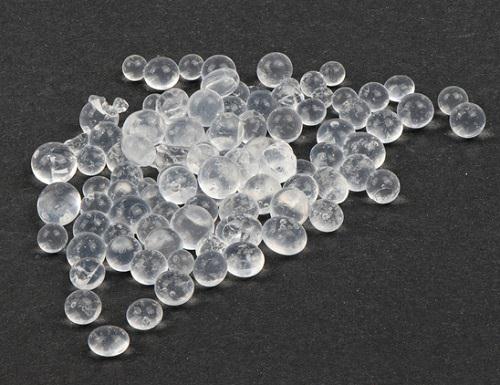
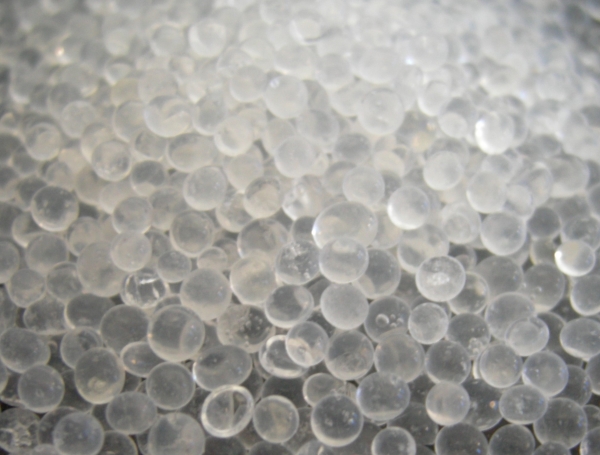
Silica xerogel is typically sold as coarse granules or beads, several millimeters in diameter. Some granules may contain a small amount of an indicator that changes color when they absorb water. Small paper bags containing silica xerogel granules often carry a “Do Not Eat” warning and are commonly used in dry food packaging to absorb moisture that could cause food to spoil.
“Wet” silica gel, usually freshly prepared from an alkaline silicate solution, varies in consistency from a soft, clear gel similar to gelatin or agar to a hard solid (i.e., a water-absorbing xerogel). It is sometimes used in laboratory processes, for example, to inhibit convection in liquids or to prevent the settling of suspended particles.
For First Use
Moisture can lead to mold and spoilage of many items, as well as condensation damage that reduces their lifespan (for instance in vitamin supplements). Silica gel packets help absorb excess moisture, thus prolonging their useful life and protecting their contents from mouldy growth.Silica gel can also be used to maintain low relative humidity levels in waveguides used for high-frequency radio or satellite transmission systems (see humidity buffering). Excessive moisture accumulation within a waveguide can lead to arcing that damages power amplifiers that power it, and condensation of moisture beads within its walls altering characteristics like impedance and frequency, thus degrading signal quality. A small compressed air system such as one found in household aquarium pumps is typically used to circulate air throughout a waveguide while covering it with silica gel.
Silica gel can also be used to dry air in industrial compressed air systems. Compressor discharge air flows over a layer of silica gel beads which absorb any excess moisture present in the air and prevent condensation or humidity damage to usage points of compressed air usage points. Similar systems are utilized by railway locomotives where condensation and ice formation in brake air lines could result in brake failure.

Before widespread air conditioning became ubiquitous in the US, salt shakers sold commercially contained silica gel beads that kept the salt dry enough to avoid clumping; these replaced traditional methods like placing grains of rice inside to achieve similar drying effects.
Silica gel can be an invaluable preservation tool to control relative humidity in museum and library exhibits and storage facilities.
Other uses for diagnostic test strips include inhalation devices, syringes, drug testing kits and hospital hygiene kits.
Silica gel is frequently considered an effective means for drying electronics that have come into contact with water accidentally, though there have been no controlled studies that directly compare its efficacy with air or fan exposure. Furthermore, an average person likely won’t possess sufficient quantities of activated or regenerated silica gel ready-to-go at home.
Regeneration
Once saturated with water, silica gel can be rejuvenated by heating it to 120 degC (248 degF). Some varieties will even “pop” when exposed to sufficient liquid, as this causes their silica gel spheres to rupture upon contact with liquid.Regenerating silica gel is both economically and environmentally beneficial, whether performed via thermal or chemical means. Chemical regeneration methods typically involve using desiccants or solvents to extract water from silica gel, although these aren’t ideal for routine regeneration. Thermal regeneration, however, can be performed on packed silica gel beds without having to open them first. Heating them at temperatures between 50degC and 120degC in an oven will do the trick. Microwaves can offer another alternative to thermal regeneration by providing more uniform heating with shorter regeneration times than conventional ovens, though care must be taken not to overheat the process. Solar heaters with compound parabolic concentrators have also proven useful, while ultrasound has recently been found effective at extracting water molecules from silica gel at temperatures between 45-90degC, offering yet another method.
Silica gel is commonly employed as a stationary phase in chromatography. Column chromatography often utilizes silica gel particles ranging in size between 40-63 mm for its stationary phase, though different forms of column chromatography utilize various particle sizes according to surface area considerations. Particle size determines whether silica gel is used for flash or gravity chromatography. Due to its polarity, however, nonpolar components tend to elute before their counterpart polar components; hence the term normal-phase chromatography. Hydrophobic groups (such as C18 groups) attached to silica gel result in the opposite elution order of polar components; this process is known as reversed-phase chromatography. Silica gel can also be used for thin-layer chromatography on aluminum, glass or plastic sheets.
Functionalizing the silica gel’s surface hydroxyl groups to produce specialty silica gels with unique stationary phase parameters is one way functionalized silica gels can be produced, and are also often employed as insolubilizing agents and scavengers in organic synthesis and purification processes.
Chelating groups can also be covalently attached to silica gel for use as selective metal ion removers in aqueous solutions. Chelating groups can also be attached via polyamine grafted onto its surface for increased mechanical integrity; additionally, silica gel binds alkali metals for M-SG reducing agents (see SiGNa Chemistry).
Silica gel does not biodegrade in water or soil environments.
Silica gel can also be used as cat litter, either alone or mixed with more traditional materials such as bentonite and clay. Unlike these options, however, silica gel leaves no trace of residue and virtually no odor – perfect for sensitive pets!
Silica gel (also known as silicon dioxide or synthetic amorphous silica (SAS)) has been recognized by the Food and Drug Administration (FDA) as a Generally Recognized As Safe (GRAS) substance, meaning it can be added to food without prior FDA approval. Under 21 CFR 172.480 in the United States, up to 2% silica may be added; within Europe this limit rises up to 5%; moreover in 2018 the European Food Safety Authority’s Expert Panel on Food Additives and Nutrient Sources conducted an exhaustive reevaluation of food additives and found no signs of toxicity even at its highest exposure levels;
Silica has many uses in food processing such as: anti-caking agents, defoaming agents, stabilizers, adsorbents, carrier systems and antifreeze. Filters aids are another useful application along with viscosity controllers and anti-settling agents. Silica is commonly found in baked goods, spices and herbs products, dairy products and cocoa products.
Filtration mes Silica gel is widely used in home water purifiers due to its water-attracting properties and surface structure which allows it to absorb minerals dissolved in the water, or “exchange ions.” Due to lack of regulatory standards surrounding home water purification products, no studies have been done to validate manufacturers’ claims about effectiveness of their filtration systems.
Silica gel can be enhanced with color-changing wetness indicators that gradually transition from anhydrous (dry) states into wet ones as it transitions through various wetness states; commonly used indicators are cobalt chloride and methyl violet. Cobalt chloride appears dark blue when dry and pink when wet; however, it is considered toxic and carcinogenic, being classified by the European Union in July 2000 as a toxic substance. Methyl violet can be modified to alter its color from orange to green or even colorless; its formulation allows users to switch its hue. Ferric and ferrous salts combined with sodium hydroxide are better alternatives. Iron sulfate, ferric ammonium sulfate (iron alum), ferric ammonium sulfate and ferric potassium sulfate all change color from amber/yellow when dry to colorless/white when saturated – suggesting their suitability as medical treatments.


